Distraction Osteogenesis Maxillary Expansion (DOME)
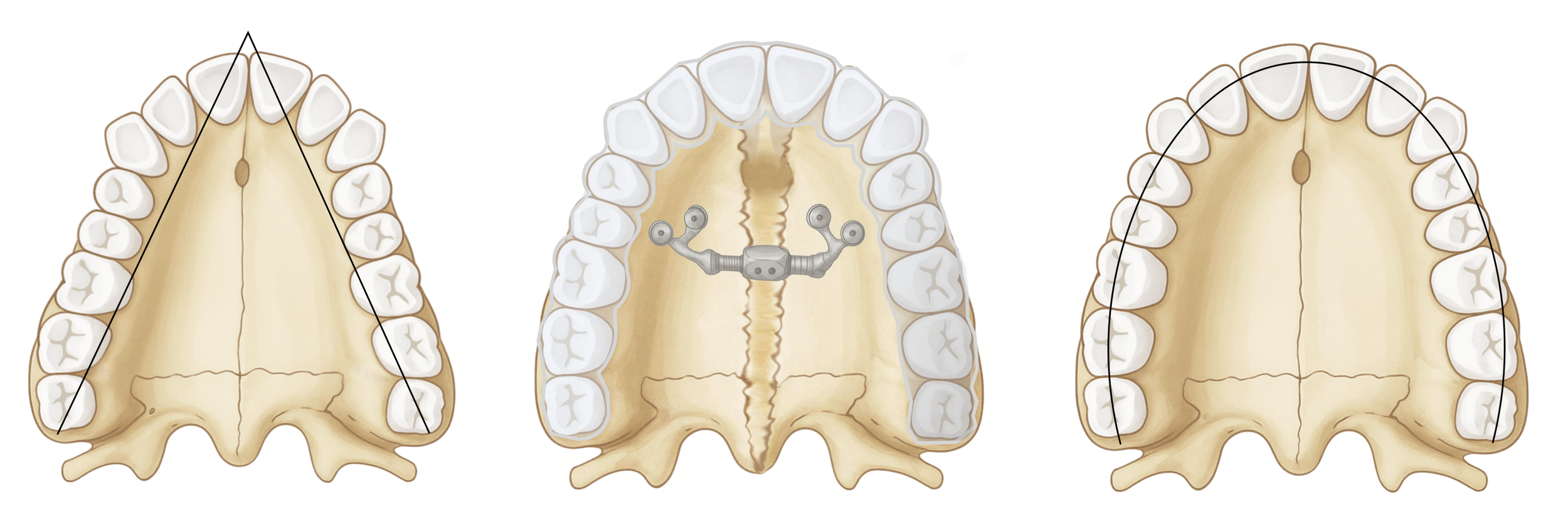
Wider palate. Better breathing. No diastema. One timeline.
The full DOME protocol, from first turn to final aligner.
This course is built from years of treating patients with sleep-disordered breathing who are candidates for maxillary expansion. It is for dental and surgical colleagues who want to integrate sleep breathing health into the treatment plan from day one.
Two parts.
Six lectures connecting sleep breathing physiology, dentofacial orthopedics, and orthodontics into one framework.
Foundational for VIE. Available as a standalone course.
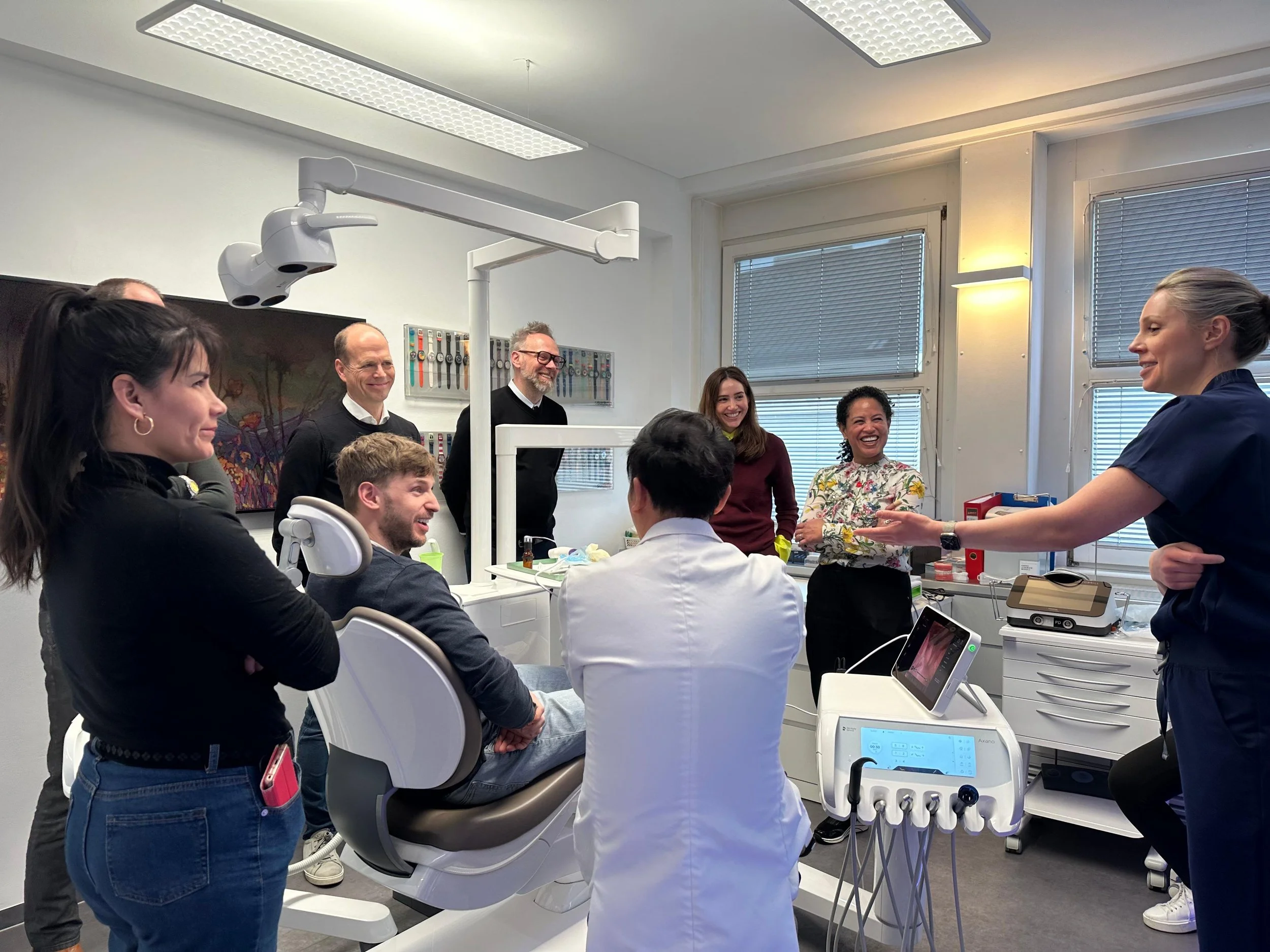
Two days in Vienna. Live patient demonstrations. Hands-on session.
September 4 and 5, 2026.
DOME is now phenotype-specific.
DOMEzero for adults. DOMEmini for growing children. Surgical DOME when bony resistance demands it.
A no-diastema workflow that synchronizes bone-anchored expansion with clear aligners on one timeline.
When the patient or the anatomy calls for it, surgical osteotomies are guided by 3D-printed surgical guides and performed under sedation.
You leave with the protocols we use in clinic and a clear path to start.

What you'll take away.
DOME Webinar Series
(6 online lectures with Q/A)
Six lectures that build the foundation. Sleep medicine, orthodontics, and surgical decision-making for maxillary expansion in sleep breathing care. Take Part 1 on its own, or pair it with the Vienna Immersive Experience.
Vienna Immersive Experience (VIE)
VIE - Workshops
-
Dr. Stanley Liu
Hands on evaluation of upper airway resistance syndrome, with a focus on women and children
Interpretation of endoscopic views
Practical guide to treatment of nasal obstruction, and how to collaborate with other specialists (MD’s, ENT’s, Myofunctional therapists)
-
Dr. Stanley Liu
Understand what limits expansion, what structures must give, and how to coordinate nasal, pharyngeal, or other procedures for optimal results.
-
Dr. Claudia Pinter
Practice the full clinical workflow—from anesthesia to torque settings—on phantom heads with step-by-step guidance on guided and freehand techniques
-
Faculty: Dr. Claudia Pinter
Compare appliance-first vs. bone-first approaches, determine patient-specific expansion rates, and avoid midline diastema with strategic planning.
-
Dr. Claudia Pinter
Plan aligner expansion with confidence using Blue Sky Plan software, optimize screw placement, and track long-term results—soon with app support.
-
Dr. Claudia Pinter
Analyze real cases of screw breakage, torus palatinae challenges, and identify when surgical osteotomies are necessary.
VIE - Clinical Experience
-
Young adult with upper airway resistance syndrome, who will be undergoing examination, imaging, and work-up in preparation for DOME
-
Patient with sleep study confirmed sleep-disordered breathing who comes to clinic for DOME.
-
Patient with sleep study confirmed sleep-disordered breathing who comes to clinic for DOME.
The webinar series (Part 1) provides essential background for the in-person course and are registered separately.
VIE Schedule
FAQ
-
Dr. Stanley Liu will demonstrate the surgical cuts involved in DOME for educational purposes. However, the course does not train or authorize dentists to perform surgical cuts in their practice.
-
To enroll in the online lecture series, purchase your access through the website. After payment, the email address will be automatically registered for all webinars. Please note that only registered email addresses can join the webinars. The link cannot be shared.
-
Yes, the online lectures will be recorded and available to you for 30 days. We highly recommend joining live to engage in the Q&A session after the lecture.
-
The no-diastema protocol will be presented in the online lecture series and will be a focus of the in-office course. After completing both the online and in-person parts, you will be able to confidently use the no-diastema protocol with your patients.
-
your role in the treatment of sleep-disordered breathing
how maxillary expansion relates to nasal breathing
risks and complications associated with maxillary expansion and how to avoid/manage them
different treatment algorithms for adult vs pediatric population
outcomes of maxillary expansion for your patients
-
The in-office part is designed to:
build the skills to confidently place mini-implants
observe the workflow in a real patient situation
deepen your understanding of sleep-disordered breathing and maxillary expansion
learn the application of the no-diastema protocol
connect with outstanding colleagues
• • learn directly from Dr. Stanley Liu and Dr. Claudia Pinter in an exclusive setting
-
No. You will receive a TAD Starter Kit for the Benefit Screw (PSM Medical) as part of the course, free of charge.
-
We designed this course so that you will be able to start providing maxillary expansion. You will learn the complete workflow, from proper diagnosis to delivering treatment.
-
Yes, this course is for you. In the online webinar series, you’ll learn the basics of orthodontic mini-implants (application, risks, and benefits). In the in-office part, you’ll learn the manual skills to insert them safely and the complete workflow (from planning the mini-implant position in the CBCT using software, to ordering the appliance, placing the mini-implants in a realistic bone model, and mounting an expander onto the screws).
-
Yes, if there are still spots left. You can see the online lecture series as building the foundation to understand sleep-disordered breathing and maxillary expansion. The in-office course builds the skills to deliver treatment with competence and confidence.
-
Yes, there will be 8 CE credits for the online webinar series and 19 CE credits for the in-office course issued by the Austrian Dental Chamber.
-
We highly recommend taking the online webinar series before attending the in-office course because the in-office course is reserved for building the skill and focusing on live patient treatment. Content of the lecture series will be assumed.
-
The Benefit Screw System (PSM Medical) will be taught in the course. We believe that a mini-implant with abutment screws allows the highest precision with TAD insertion and provides the most reliable expansion results.
-
You will receive:
workflow images to share the step-by-step process with your team
videos of pre-drilling, mini-implant placement, and expander insertion
Questionnaires
App for ENT referral
-
You will place mini-implants yourself on a true-to-life bone model mounted inside a phantom head. You will practice placing the mini-implants through a guide and freehand. Because the models are mounted in a phantom head and not sitting on a bench top, you will be trained to orient yourself as you would with a patient lying in your dental chair.
You will also observe Dr. Claudia Pinter placing mini-implants in a patient.